Category Archives: old photographs

Lemnos/Limnos island

Leutnant Ludwig Preller in Greece, 30 April 1944.

 In 1943-44 my grandfather Lt. Ludwig Preller (1918-1945?) was stationed on the island of Lemnos with the V./Festungs Infanterie Bataillon 999, that unit being part of the Festungs Infanterie Regiment 963 (Fstg.Inf.Rgt. 963) under the command of Oberstleutnant Clotz (Rgts.Kdr. Obstlt. Clotz), later Oberst Clotz when the regiment was upgraded for Festungs Infanterie Brigade 963 (also known as ‘Brigade Clotz’).

"Aegean_Sea_with_island_groups_labeled"
"Ludwig

Leutnant Ludwig Preller in Greece, 30 April 1944.
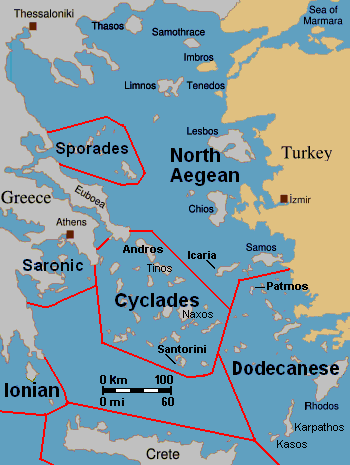
 

Aegean_Sea_with_island_groups_labeled

Situated in the  Northern Aegean, the island (see map) played an important role during World War I for the Allies’ Dardanelles campaign, as the bay of Moudros served as a base for allied ships in the battle of Galipoli. This place if of particular national commemorative significance to Australian and New Zealand families of the ANZAC soldiers and nurses who participated in this campaign.

myrina-18
View of Myrina (formerly Kastron) bay today seen from the castle ruins (credit Vasilis Protopapas, source: http://www.poseidonlemnos.gr)

During WWII, the island was occupied by the Germans on 25 April 1941, in the wake of the Wehrmacht’s invasion of Greece, by the Infanterie Regiment 382/164 Inf.Division under the command of Oberst Wilhelm-Helmuth Beukemann (see corresponding thread in the ‘Forum der Wehrmacht‘). The same bay of Moudros served as a base for German ships controlling the northern Aegean sea.

limnos252c2bgerman2boccupation2b1941
German troops marching through Myrina (Kastron), Lemnos’ capital, 25 April 1941 (Web)

I found this rare photograph (on the forum MapleLeafUp) of the truck used by the Hafenkommandant of Kastron (today Myrina) on Lemnos, which is a captured British vehicle.

attachment
“Showing Morris-Commercial CS8 Z389950 picked up from the battlefield and put to use as a harbour command’s hack at Kastron, Isle of Lemnos, Greece, 1941”.

"Telecommunication Old army bunker on a hilltop in Lemnos, with telecommunications mast. Source: https://www.alamy.com/stock-photo-a-telecommunications-mast-on-a-hill-top-on-lemnos-greece-with-an-old-51228730.html

The end of the Afrika Korps and the Greek islands instead

In 1943, with the defeat of the Rommel’s Afrika Korps in Tunisia, the German High Command decided to reinforce the defenses of the Balkan coast-line including Northern Greece and the Peloponese islands. Rommel himself visited Saloniki in July 1943 to this purpose (see German propaganda film footage here). This is how many troops initially meant to be sent to Tunisia to bolster the Afrika Korps were then dispatched to Greece, including reinforcements for the Leichte Afrika Division. This explains the Afrika Korps “Troppen-Uniform” and equipment used by the units in the area.

This is also the period when the so-called “punishment-bataillons” were sent from Heuberg to Saloniki and the Peloponese islands, including the 963 Afrika Schutzen Regiment sent to Lemnos.The “999” punishment units in the Northern Aegean

Anti-nazi political prisoners as Wehrmacht soldiers!

As is well documented, the “999” units in Greece were composed of former-prisoners, both so-called common criminals (under the nazi definition for this, which included for instance homosexuals!) and political (roughly 50/50%), as also evidenced through information from my grandfather on the 963 Afrika Schutzen Regiment (see here). Among the ‘politicals’ quite a few (generally with a communist party, KPD, or Social Democrat, SPD, background) ended up going over to the Greek resistance movement ELAS.

Such was the case for instance of reknowned socialist jurist and political scientist Wolfgang Abendroth (1906-1985), an important contributor to the constitutional foundation of postwar West Germany.

a65-15
Abendroth before the war (credit: International Institute of Social History)

As a lecturer he oversaw the habilitation in political science of major German philosopher, sociologist, and political theorist Jürgen Habermas.

620
Wolfgang Abendroth (1906-1985).

His account of his period on Lemnos and how he went over to the Greek resistance movement in 1944 gives some interesting insights into the military-political conditions on the island.

From September 1944, the German forces progressively withdrew from Lemnos to the mainland via Thessaloniki. This was the case of my grandfather’s unit, the V./Festungs Infanterie Bataillon 999 which was transported to Thessaloniki beginning of September.

The island was liberated by the  British forces, or rather by the Greek Sacred Squadron/Regiment (or initially ‘Greek Sacred Band’) under the command of the British Raiding Forces on 16 and 17 of October 1944.

 Further Anti-Nazi resistance fighters in Lemnos

Kurt Bennewitz (shot by the SS in 1945 at Loiblpass)

Bernhard Sühlbrandt : Communist, went over to ELAS Greek resistance, seen in 1st November 1944 liberation Parade in Thessaloniki, see photo below – copy from Hans-Peter Klausch, 1986, Die 999er. Sühlbrandt is the last one on the right of the picture.
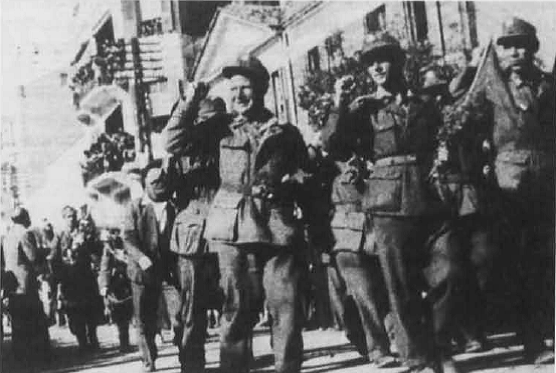
Deutsche beim ELAS paradieren in Saloniki in Klausch

(Under work…)

Adendum (31/08/2023): War Photographer Erich Rinka on Lemnos/Limnos

I recently discovered a new series of photographs taken by the war photographer Erich Rinka on Lemnos in 1943/44.

They can be found here on the German Digital Library:

But it never says which unit it is, less the names of the officers and rarely the places… hopefully someone knowledgeable seeing these could help identifying people and places!
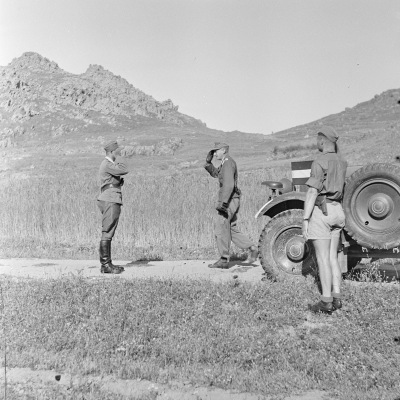
Rinka, Erich: Griechenland. Insel Limnos. “Soldaten der Wehrmacht im Einsatz”, 1943/1944 Source: Deutsche Digitale Bibliothek

I am still trying to identify this officer who appears often in Erich Rinka’s photo series of Lemnos:
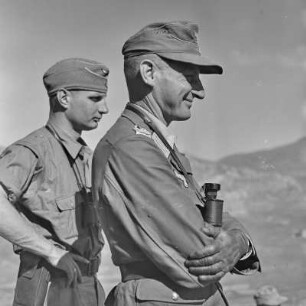
Rinka, Erich: Griechenland. Insel Limnos. “Soldaten der Wehrmacht im Einsatz”, 1943/1944 Source: Deutsche Digitale Bibliothek

Any held with the identification most welcome!

Further information on the Island of Lemnos:

Lemnos during WWI:

http://lemnosgallipolicc.blogspot.mx/2014_09_01_archive.html

On Wolfgang Abendroth:

http://www.barth-engelbart.de/?p=29092

https://socialhistory.org/en/collections/wolfgang-abendroth?language=nl

https://de.wikipedia.org/wiki/Wolfgang_Abendroth

http://www.spiegel.de/spiegel/print/d-46034494.html

http://www.spiegel.de/spiegel/print/d-13516517.html

http://www.gdw-berlin.de/en/recess/biographies/index_of_persons/biographie/view-bio/abendroth/

On British forces liberating the island:

Australian newspaper clip from 23 October 1944: http://trove.nla.gov.au/newspaper/article/11366819


Paros Island (and Milos)

During WWII, Paros Island was first occupied by the Italians in 1941 and then, with the surrender of Italy, by the German Wehrmacht from end of 1943 until October 1944. The main strategic objective to occupy the island was to build an airport there – a dire need for the supply of the German units scattered in the Aegean islands and beyond.

The German unit occupying the island from December 1943 was the Festungs Infanterie Bataillon 1010 ( Fstg.Inf.Btl.1010, St./1.-4. Kp.).

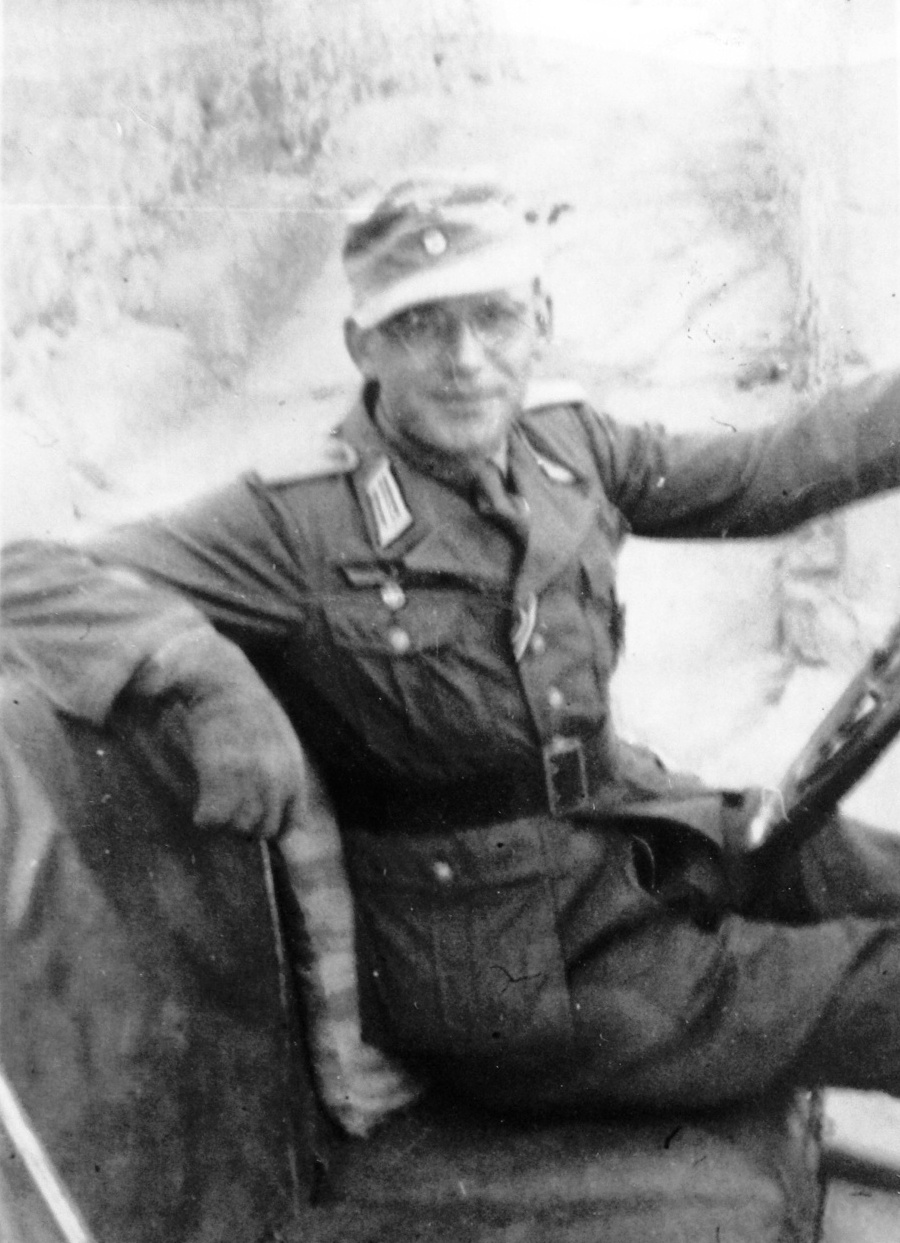
Although, my grandfather Lt. Ludwig Preller wasn’t in this unit (but the V./Festungs Infanterie Bataillon 999) he seems to have been stationed on the island of Paros for some reason or at least to have visited it regularly on duty from September 1943 to December 1943 at least.

Lt Preller in Paros Oct 1943

Lt Preller in Paros October 1943

Ludwig Preller, Dec.1943, Paros

Lt. Ludwig Preller, Paros, Dec. 1943

The Commander of the island was Major Georg Graf von Merenberg.

125 youths to be executed saved

Here is a very interesting story about what happened on the island during the war, the kind of story that makes you believe in humanity again:

http://www.lively-arts.com/humaninterest/2012/03/closed_circle_fs.htm

Photograph of Count von Merenberg, from http://www.lively-arts.com, courtesy of Dr Clotilde von Rintelen, Gräfin von Merenberg. Studio portrait taken 1943.

The commander Major von Merenberg was supposed to apply an order to execute 125 Paros youths in reprisal for the killing of a German soldier – it took some very diplomatic convincing from the Longuvarda monastery monks but he accepted to disobey the order.

Count Georg von Merenberg seems to have been quite a character!… and certainly not a staunch national-socialist, but very much a representative figure of the old Prussian military aristocracy… and with prestigious Russian descent, counting  the Russian Zar Alexandre II and the poet Pushkin among his forebears! Although, this wasn’t something to show-off in Nazi Germany…

In fact, his posting on Paros (to oversee the completion of a Luftwaffe airport and base) seems to have been a way to halt his military career – an officer of Prussian background with his trajectory would have had a much higher rank by that stage, had he been more sympathetic with the NS regime.

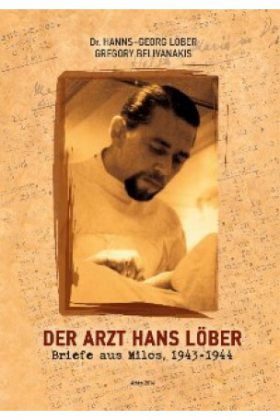
Another positive story: Hans Löber, the “Good medic” of Milos:

An interesting article in Cologne newspaper (2019) about this German military medic’s work healing local people: Hans Loeber Milos 1944

His son published his wartime letters from Milos in this book:

Hans Loeber Limnos

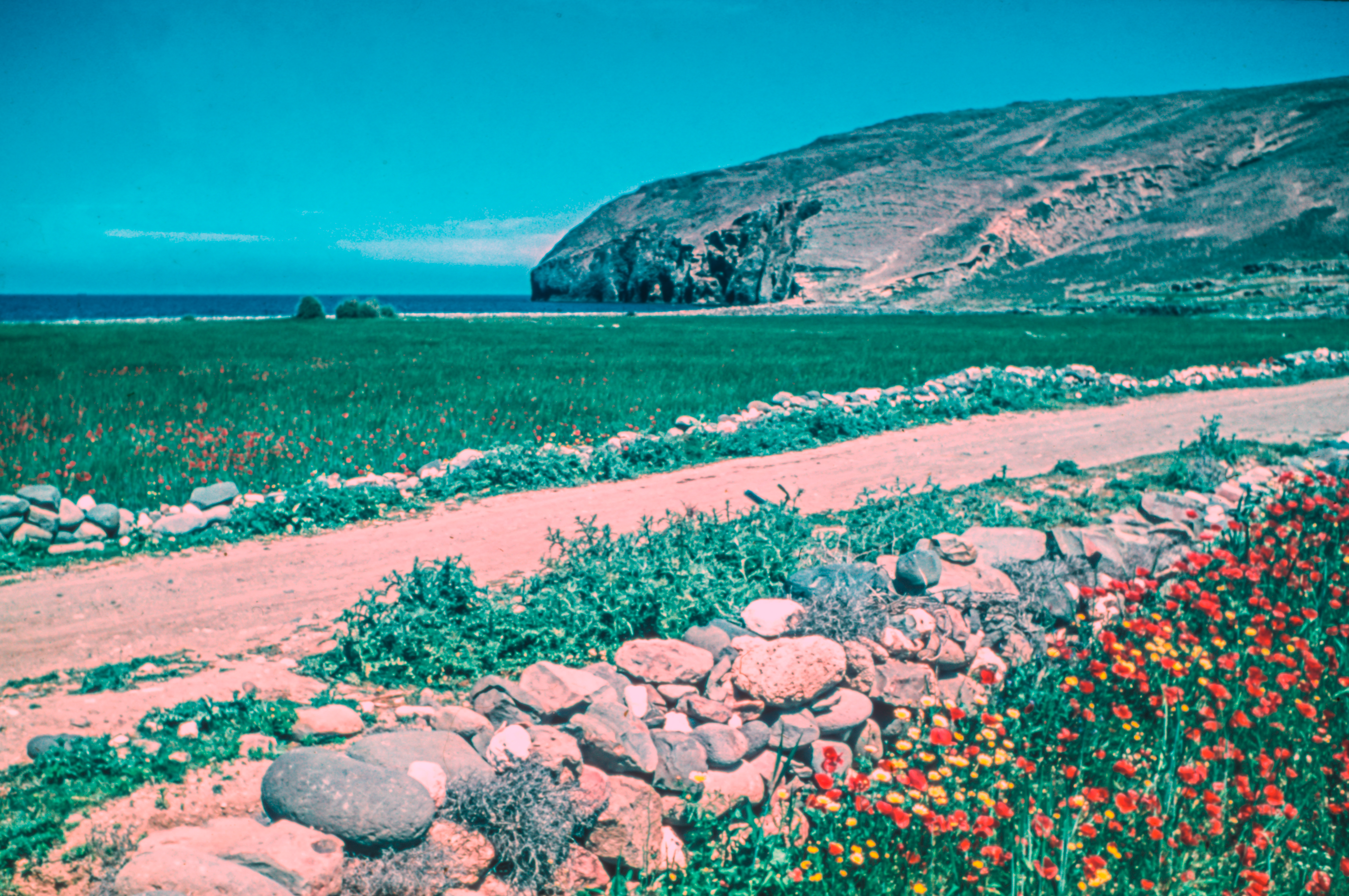
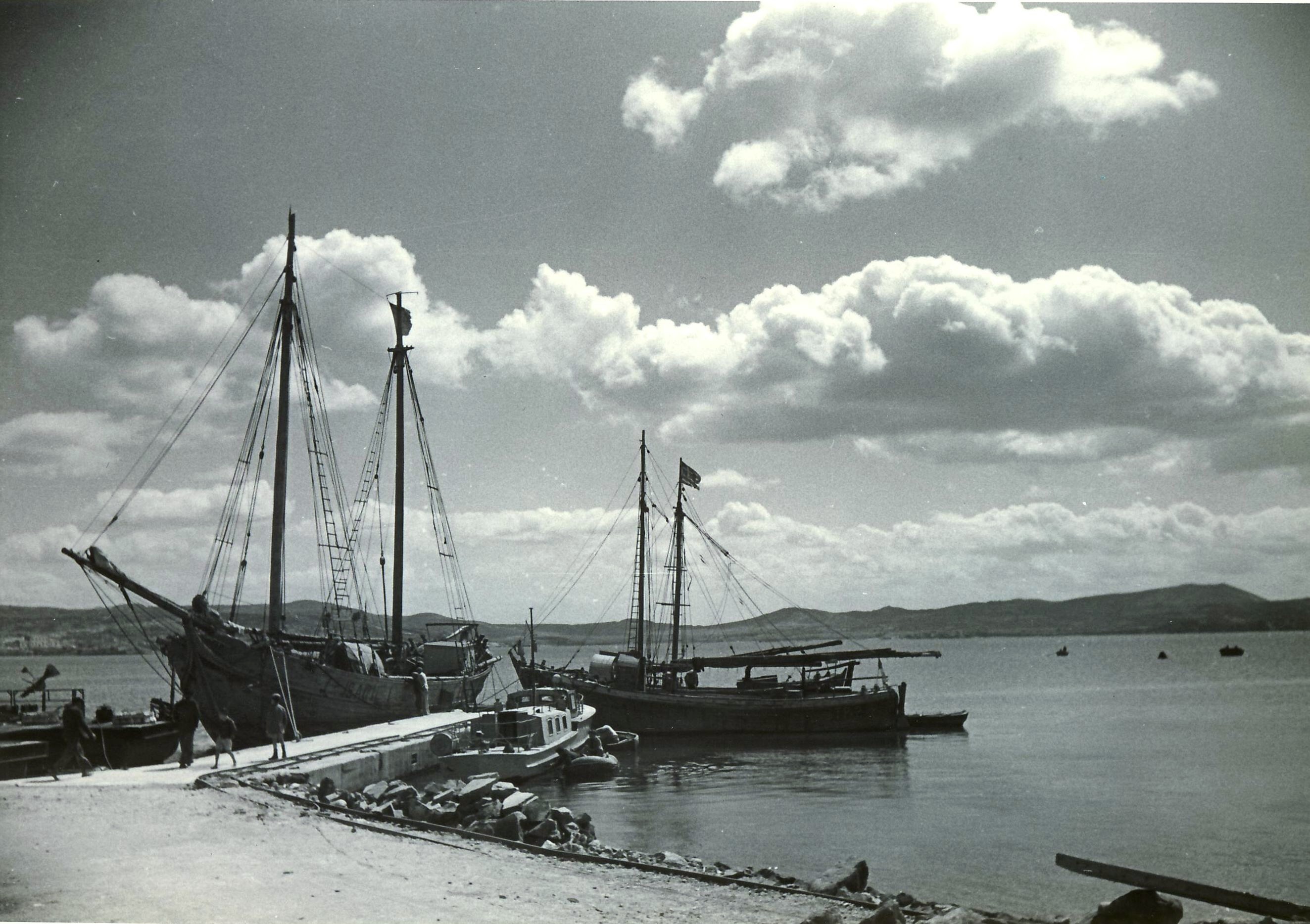
Rare  wartime colour photographs of Milos and Paros

I also discovered this absolutely amazing series of photos of Milos and Paros in 1944, including colour shots (!!!) taken by a Grenadier, Albert Petersen, with an obvious talent and expertise for photography:

IMG_0001

Near Pollomia, Milos 1944. Foto Albert Petersen (with authorisation from L.Petersen)

These were initially on the Photo-platform Panoramio until this was shut down. I was able to get in touch with Albert’s son who very kindly provided me with copies of these.

Hafen von Adamas

The harbour of Adamas. Photo A. Petersen (courtesy of L.Petersen)

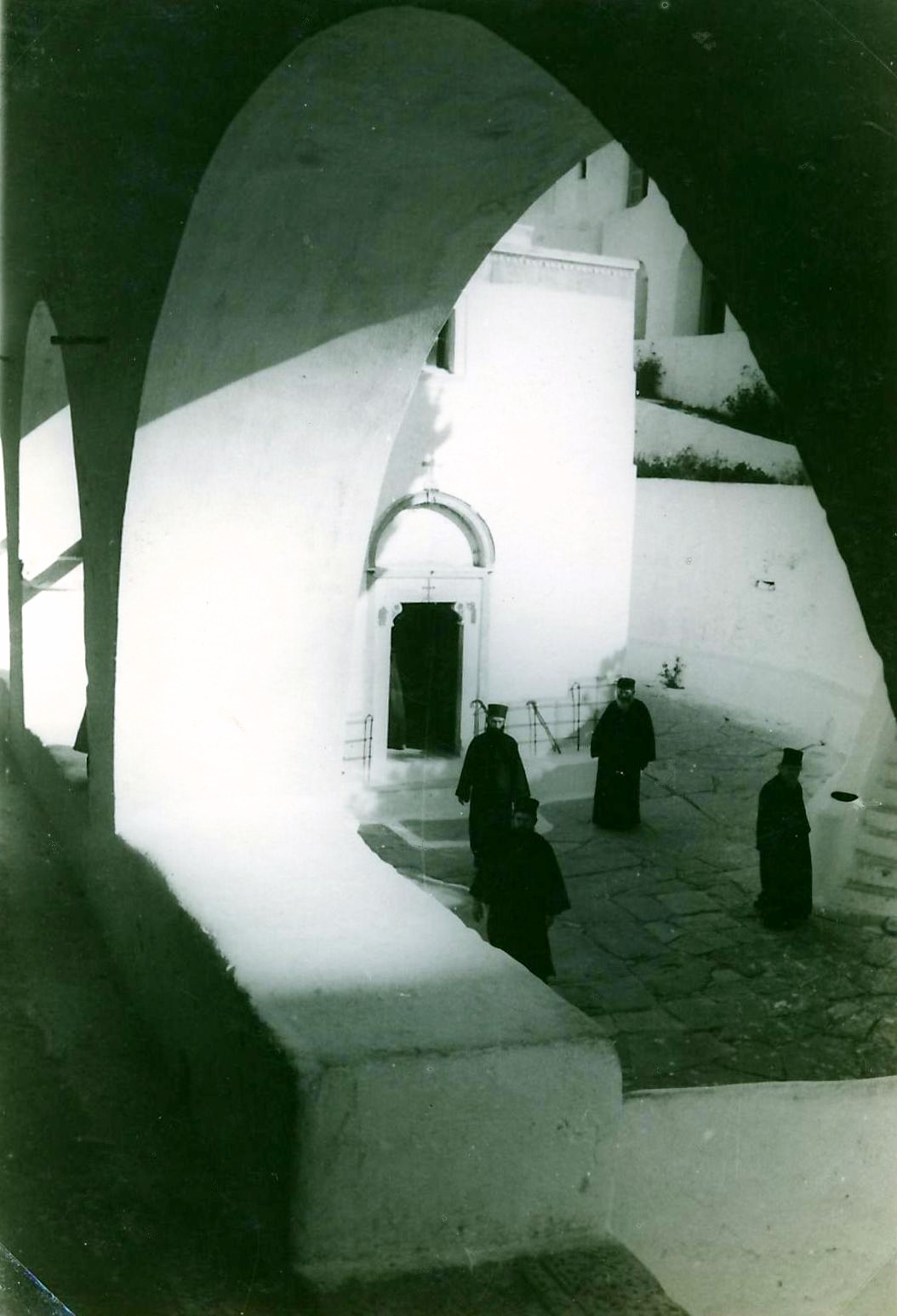
As his son explains in the comments, Albert Petersen wasn’t keen on the war, had very friendly relations with the islanders and ‘discharged himself’ from the Wehrmacht by taking refuge in  the Longuvarda monastery (the same one where G. von Merenberg was convinced not to execute 125 young Greeks in reprisal of the killing of German soldiers in a commando action).

Klosterhof Longuvarda 1944A_CC

Monastery Longuvarda, Paros, 1944. Photo taken by Albert Petersen, Courtersy of L. Petersen

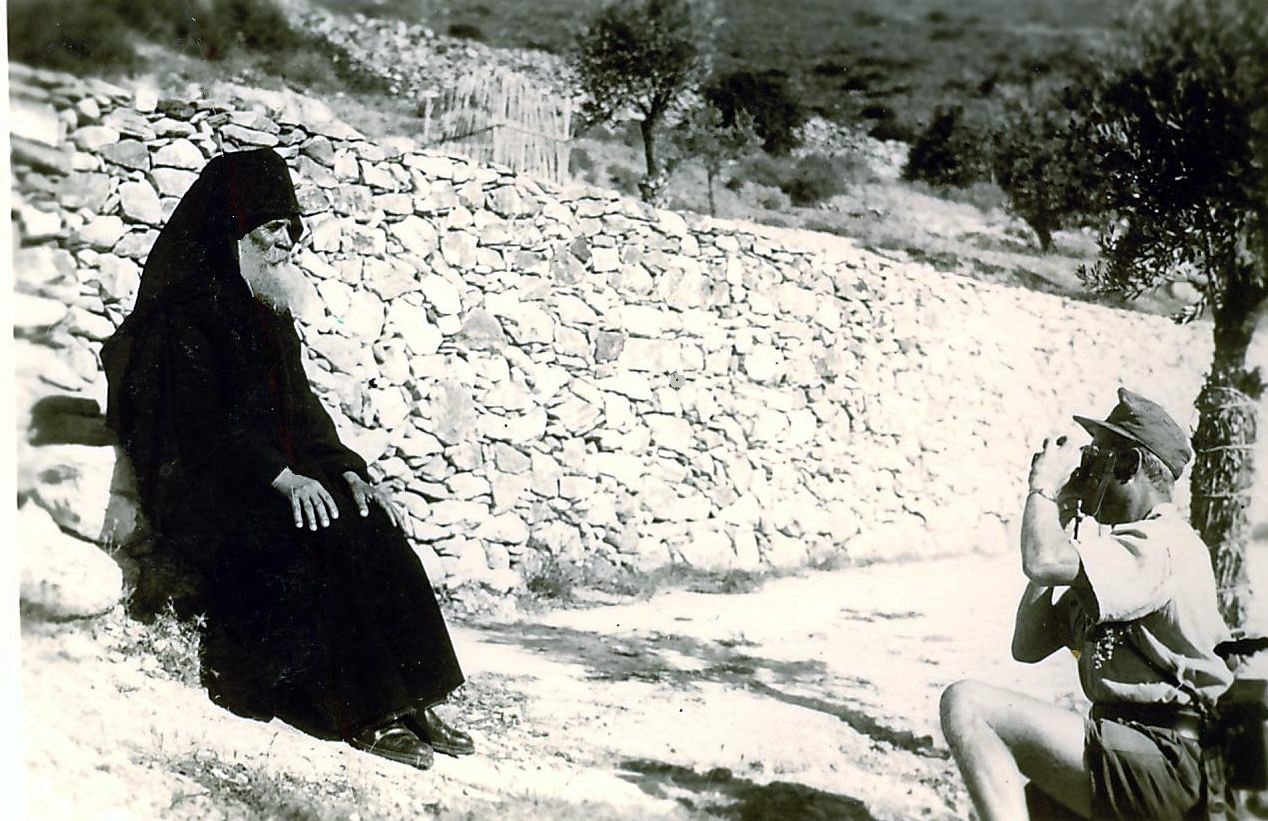
The initial Panoramia post came with an interesting explanation of the photographers’ trajectory and relationship to locals in comments to one of his pictures of Longuvarda monks:

5 - Albert fotografiert Mönch

Albert Petersen, taking photograph of a monk (court. L. Petersen)

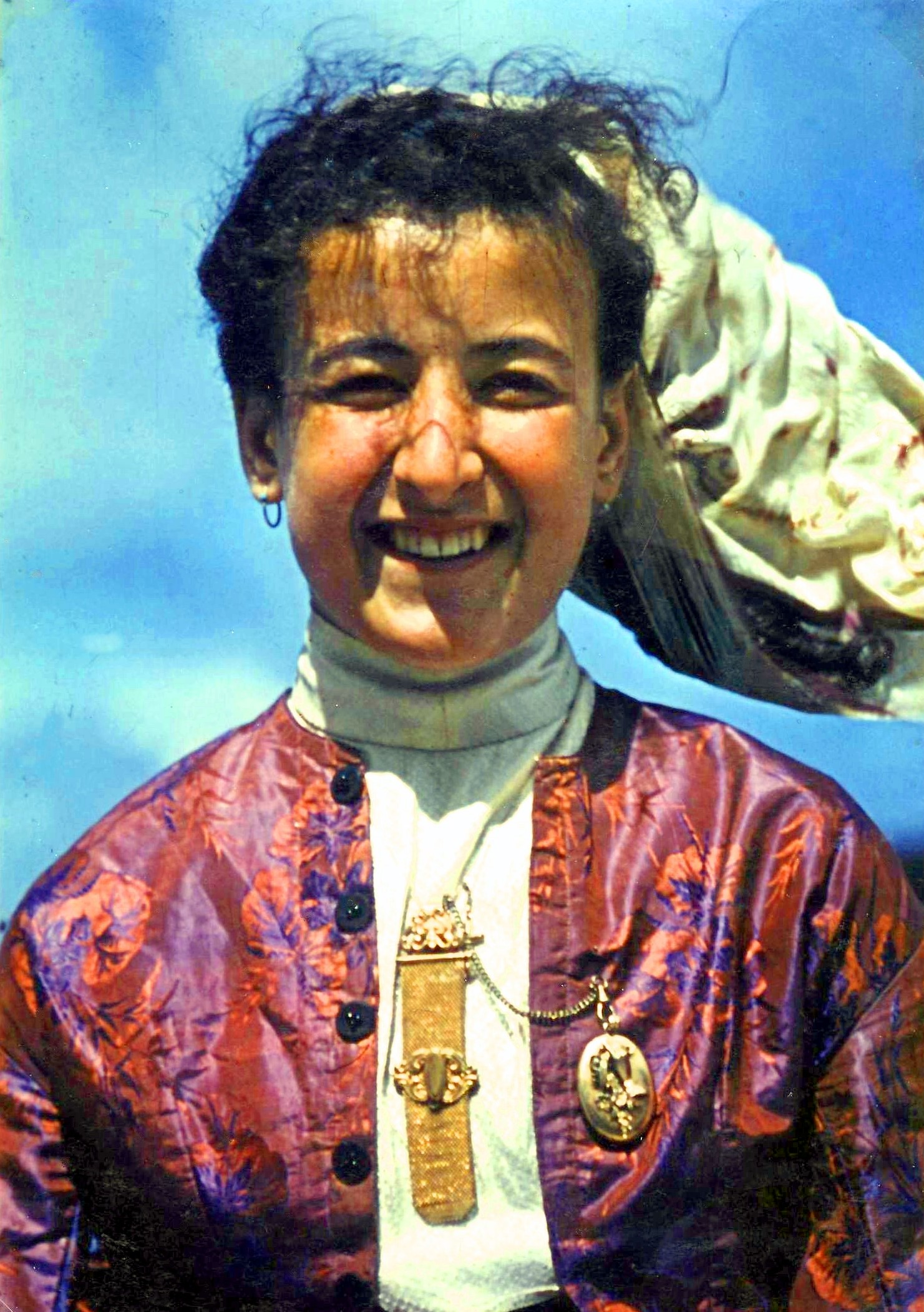
He also took  this beautiful picture of a young lady who he visited again after the war in the 1950s and who was still alive in 2010 and remembered the picture being taken of her:

58 - Stasia 1944_CC

A girl from Milos in traditional dress, 1944. Photo taken by Albert Petersen, courtesy of Lutz Petersen.

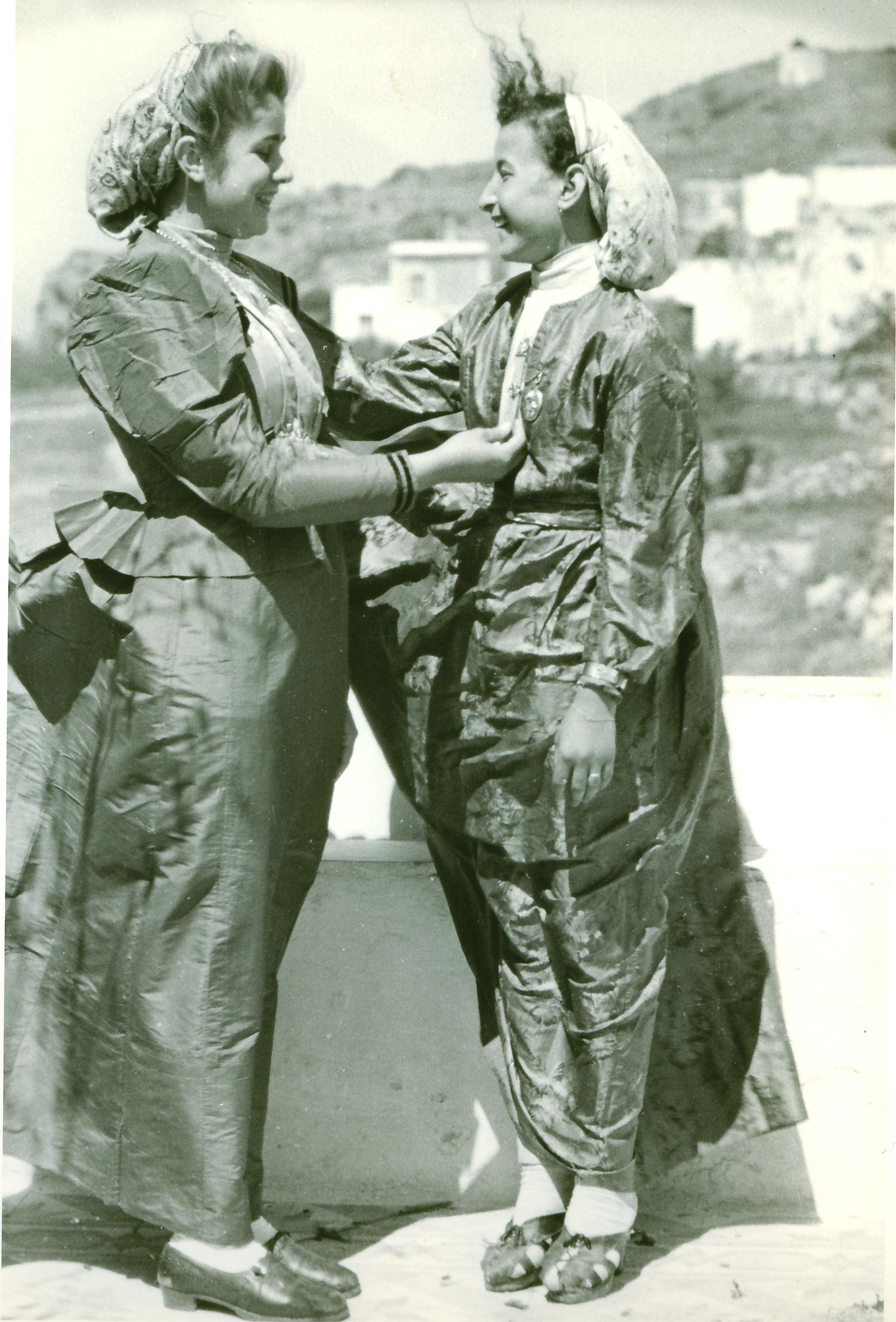
Argiro und Stasia auf Milos

Argiro and Stasia in Limnos (1944? Photo A. Petersen, Courtesy L.Petersen).

Scan20017

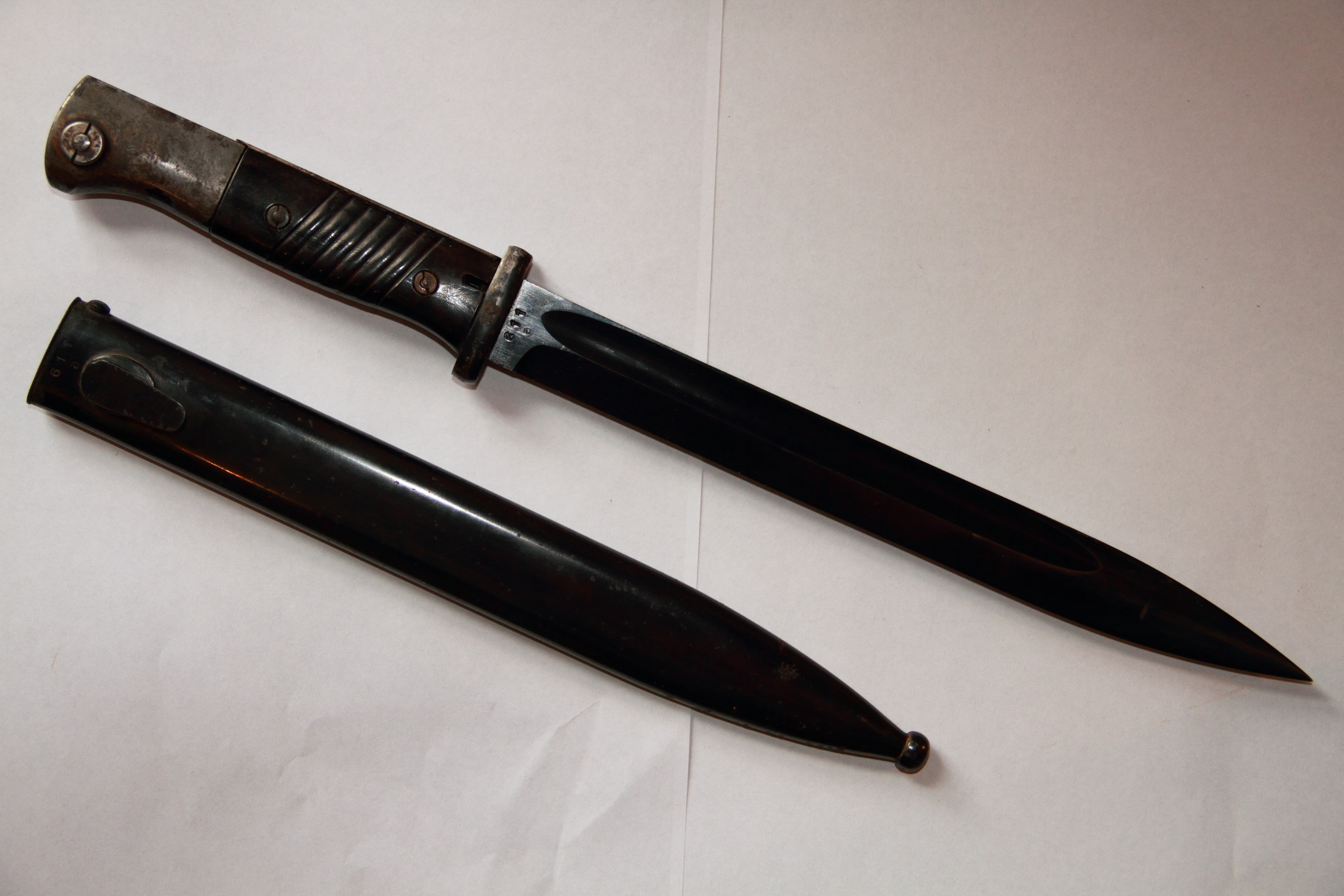
A Battle of the Bulge memorabilia: Recent German History in one bayonet!

Bayonet and scabbardDPP_0016

Fred Tolles or “Uncle Fred”, who was drafted in the US army early 1942 following the Japanese attack on Pearl Harbor, brought this German bayonet back from his campaign in the Battle of the Bulge (Ardennes). This last German attack on the Western front (December 1944) was Hitler’s final offensive attempt of the war, aimed at throwing back the Western allies and re-taking the port of Antwerp and thus cut their vital supply lines. The idea was to win time to introduce and use the new “Wunderwaffen” (“miracle weapons”) on a massive scale, that is not only the V1 and V2 bomb-drones and missiles but also the recently introduced Me262, the first ever operational fighter-jet as well as further technological developments (like the rocket-propelled Me163 aircraft also operational by the end of the war). Luckily, the Ardennes offensive was eventually halted (after heavy losses on both sides) and all this new German war technology was too little, too late, for Germany to turn the tide of the war.

Fred Tolles, was a truck driver in the army and would probably have been bringing up troops and supplies or moving some of the heavy howitzers to stop the German advance from breaking out of the Ardennes.

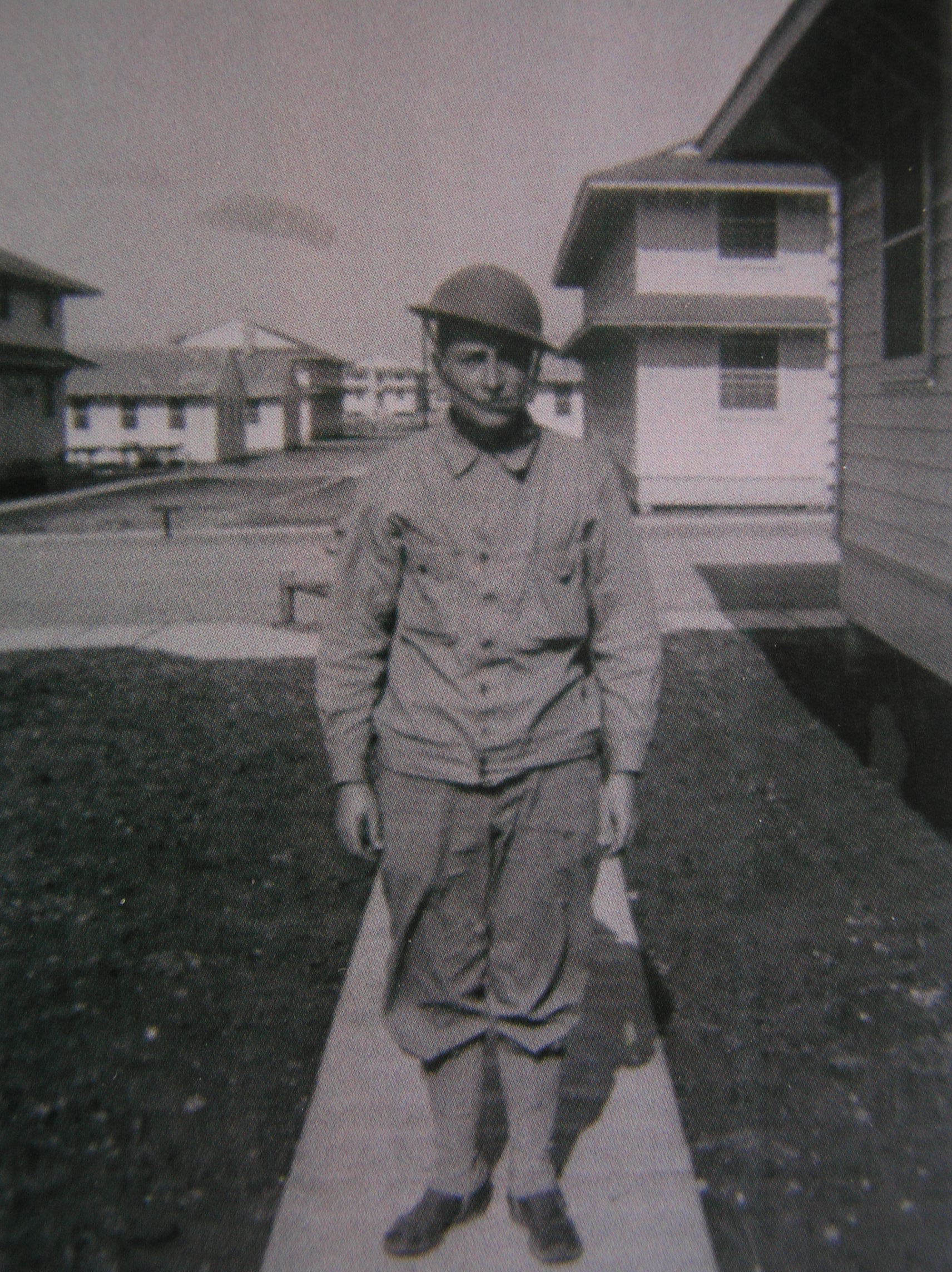
Fred Tolles at training barracks in USA, early 1942

Fred Tolles at training barracks in USA, early 1942

Back to the bayonet.
Fred’s nephew, Claude Long, very kindly gave it to me. Not much more is known about uncle Fred’s time on the European front, and less even about exactly where and in which circumstances he picked up this war trophy.
However, objects can speak for themselves, to a certain extent, and tell us a further story.
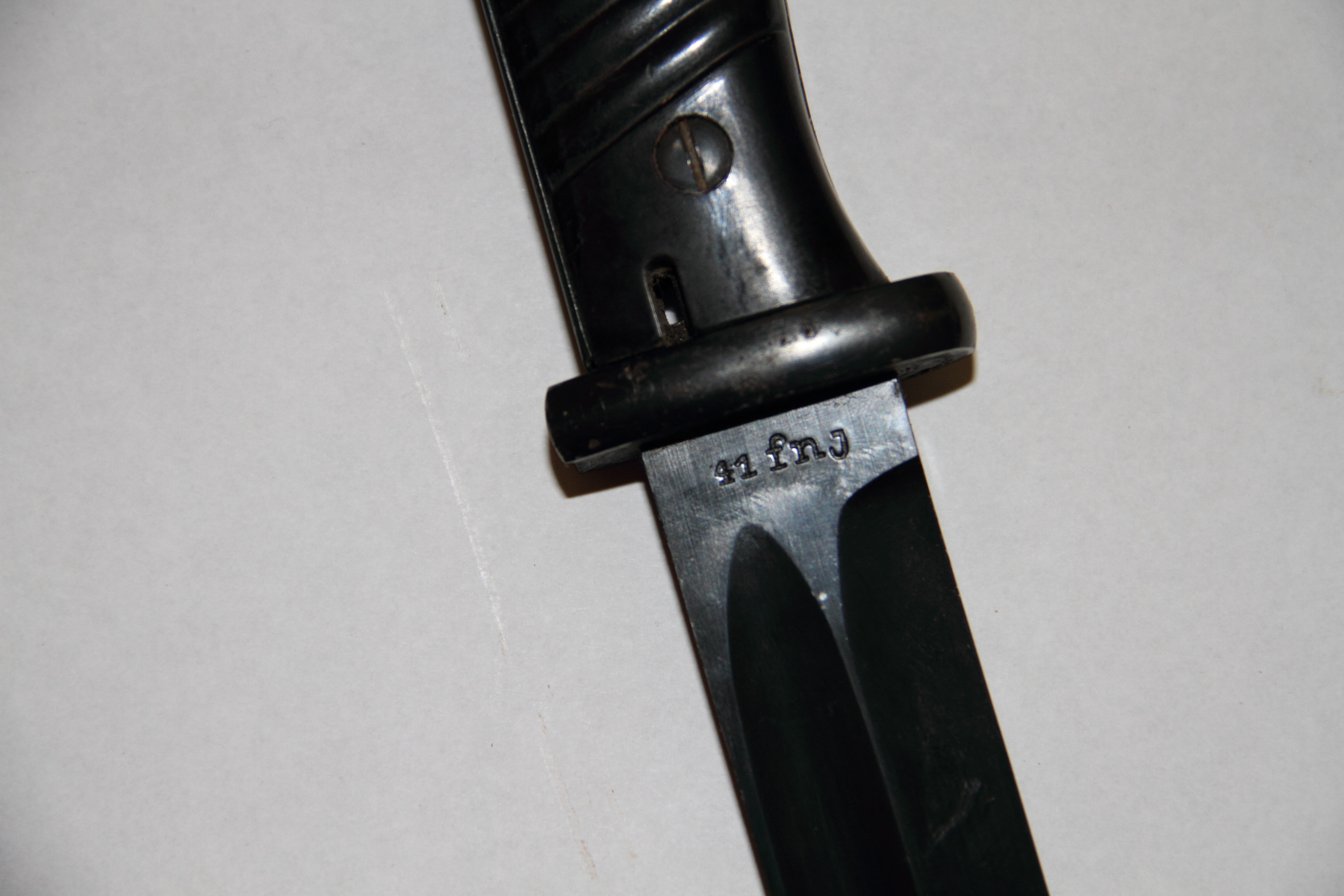
The markings on it tell us that it is a 1941 bayonet for the standard K98 Mauser rifle. In particular the “41 fnj” printed on the blade and on the scabbard indicate that is was made in 1941 by the Alex Copel factory in Solingen, a German town still known today for its good knives!
Now the tragic and dark irony of recent German history is that the Copel family owning the “Alex Coppel, Stahlware u. Waffenfabrik GmbH” which grew out of a family business founded in 1821 and produced many bayonets during both world wars, was Jewish!
In 1936 the firm was “arianised” – its legitimate owners expropriated although the factory’s name was apparently upheld! – and in 1942 Alex Copel and other family members were deported to Theresienstadt where he died within three weeks. That’s the Nazis gratitude for helping in Germany’s war effort!

Detailed description of the bayonet and its markings (click on images for close view):

This early war bayonet is of the the higher quality fabrication. Late war bayonets were made more crudely and are known as ‘Ersatz’-bayonets. Like others this early model reveals a fascinating multiplication of stamps/markings associated to the quality controls both from the maker and from the Waffenamt, the local military procurement agency.

Year decimals and maker's mark on blade ricasso

Year decimals and maker’s mark on blade ricasso

Scabbard's frog stud with '611 a' mark on scabbard

Scabbard’s frog stud with ‘611 a’ mark on scabbard

'WaA833' stamp on the pommel identifies the Waffenamt 833 (German weapons agency) located in Solingen.

‘WaA883’ stamp on the pommel identifies the Waffenamt 883 (German weapons agency) located in Solingen.

Dismantling the handle reveals more information, like the fabrication number '2025' and...

Dismantling the handle reveals more information, like the fabrication number ‘2025’ and…

Inner side of bakelite handle plate reveals more markings

Inner side of bakelite handle plate reveals more markings

... reveals a different version with full German-NS eagle with Swastika rather than just the stylised lines above the 'WaA883' code!

… including a different version of the Waffenamt stamp with full German-NS eagle with Swastika rather than just the stylised lines above the ‘WaA883’ code! (click on image for close-up)

Some links:
http://worldbayonets.com/Bayonet_Identification_Guide/Germany__Post_WW_I_/Germany_1933_1945.html#TopPage
http://www.quanonline.com/military/military_reference/german/blades/army/k98.php
http://de.wikipedia.org/wiki/Alexander_Coppel

http://en.wikipedia.org/wiki/Waffenamt_codes