Tag Archives: Ludwig Preller

Lemnos/Limnos island

Leutnant Ludwig Preller in Greece, 30 April 1944.

 In 1943-44 my grandfather Lt. Ludwig Preller (1918-1945?) was stationed on the island of Lemnos with the V./Festungs Infanterie Bataillon 999, that unit being part of the Festungs Infanterie Regiment 963 (Fstg.Inf.Rgt. 963) under the command of Oberstleutnant Clotz (Rgts.Kdr. Obstlt. Clotz), later Oberst Clotz when the regiment was upgraded for Festungs Infanterie Brigade 963 (also known as ‘Brigade Clotz’).

"Aegean_Sea_with_island_groups_labeled"
"Ludwig

Leutnant Ludwig Preller in Greece, 30 April 1944.
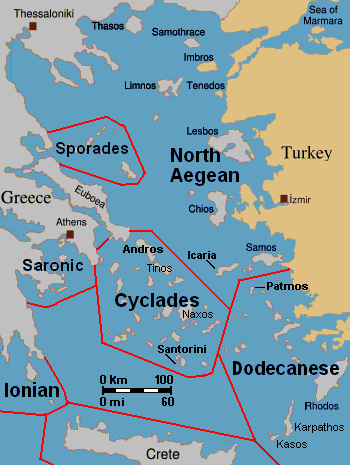
 

Aegean_Sea_with_island_groups_labeled

Situated in the  Northern Aegean, the island (see map) played an important role during World War I for the Allies’ Dardanelles campaign, as the bay of Moudros served as a base for allied ships in the battle of Galipoli. This place if of particular national commemorative significance to Australian and New Zealand families of the ANZAC soldiers and nurses who participated in this campaign.

myrina-18
View of Myrina (formerly Kastron) bay today seen from the castle ruins (credit Vasilis Protopapas, source: http://www.poseidonlemnos.gr)

During WWII, the island was occupied by the Germans on 25 April 1941, in the wake of the Wehrmacht’s invasion of Greece, by the Infanterie Regiment 382/164 Inf.Division under the command of Oberst Wilhelm-Helmuth Beukemann (see corresponding thread in the ‘Forum der Wehrmacht‘). The same bay of Moudros served as a base for German ships controlling the northern Aegean sea.

limnos252c2bgerman2boccupation2b1941
German troops marching through Myrina (Kastron), Lemnos’ capital, 25 April 1941 (Web)

I found this rare photograph (on the forum MapleLeafUp) of the truck used by the Hafenkommandant of Kastron (today Myrina) on Lemnos, which is a captured British vehicle.

attachment
“Showing Morris-Commercial CS8 Z389950 picked up from the battlefield and put to use as a harbour command’s hack at Kastron, Isle of Lemnos, Greece, 1941”.

"Telecommunication Old army bunker on a hilltop in Lemnos, with telecommunications mast. Source: https://www.alamy.com/stock-photo-a-telecommunications-mast-on-a-hill-top-on-lemnos-greece-with-an-old-51228730.html

The end of the Afrika Korps and the Greek islands instead

In 1943, with the defeat of the Rommel’s Afrika Korps in Tunisia, the German High Command decided to reinforce the defenses of the Balkan coast-line including Northern Greece and the Peloponese islands. Rommel himself visited Saloniki in July 1943 to this purpose (see German propaganda film footage here). This is how many troops initially meant to be sent to Tunisia to bolster the Afrika Korps were then dispatched to Greece, including reinforcements for the Leichte Afrika Division. This explains the Afrika Korps “Troppen-Uniform” and equipment used by the units in the area.

This is also the period when the so-called “punishment-bataillons” were sent from Heuberg to Saloniki and the Peloponese islands, including the 963 Afrika Schutzen Regiment sent to Lemnos.The “999” punishment units in the Northern Aegean

Anti-nazi political prisoners as Wehrmacht soldiers!

As is well documented, the “999” units in Greece were composed of former-prisoners, both so-called common criminals (under the nazi definition for this, which included for instance homosexuals!) and political (roughly 50/50%), as also evidenced through information from my grandfather on the 963 Afrika Schutzen Regiment (see here). Among the ‘politicals’ quite a few (generally with a communist party, KPD, or Social Democrat, SPD, background) ended up going over to the Greek resistance movement ELAS.

Such was the case for instance of reknowned socialist jurist and political scientist Wolfgang Abendroth (1906-1985), an important contributor to the constitutional foundation of postwar West Germany.

a65-15
Abendroth before the war (credit: International Institute of Social History)

As a lecturer he oversaw the habilitation in political science of major German philosopher, sociologist, and political theorist Jürgen Habermas.

620
Wolfgang Abendroth (1906-1985).

His account of his period on Lemnos and how he went over to the Greek resistance movement in 1944 gives some interesting insights into the military-political conditions on the island.

From September 1944, the German forces progressively withdrew from Lemnos to the mainland via Thessaloniki. This was the case of my grandfather’s unit, the V./Festungs Infanterie Bataillon 999 which was transported to Thessaloniki beginning of September.

The island was liberated by the  British forces, or rather by the Greek Sacred Squadron/Regiment (or initially ‘Greek Sacred Band’) under the command of the British Raiding Forces on 16 and 17 of October 1944.

 Further Anti-Nazi resistance fighters in Lemnos

Kurt Bennewitz (shot by the SS in 1945 at Loiblpass)

Bernhard Sühlbrandt : Communist, went over to ELAS Greek resistance, seen in 1st November 1944 liberation Parade in Thessaloniki, see photo below – copy from Hans-Peter Klausch, 1986, Die 999er. Sühlbrandt is the last one on the right of the picture.
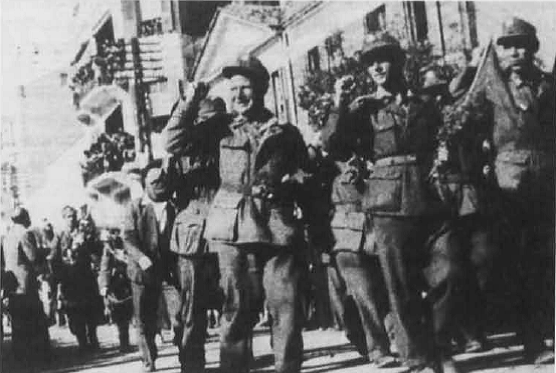
Deutsche beim ELAS paradieren in Saloniki in Klausch

(Under work…)

Adendum (31/08/2023): War Photographer Erich Rinka on Lemnos/Limnos

I recently discovered a new series of photographs taken by the war photographer Erich Rinka on Lemnos in 1943/44.

They can be found here on the German Digital Library:

But it never says which unit it is, less the names of the officers and rarely the places… hopefully someone knowledgeable seeing these could help identifying people and places!
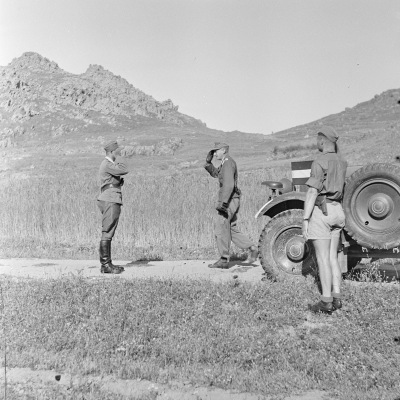
Rinka, Erich: Griechenland. Insel Limnos. “Soldaten der Wehrmacht im Einsatz”, 1943/1944 Source: Deutsche Digitale Bibliothek

I am still trying to identify this officer who appears often in Erich Rinka’s photo series of Lemnos:
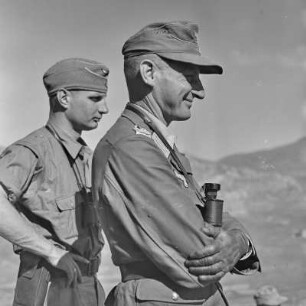
Rinka, Erich: Griechenland. Insel Limnos. “Soldaten der Wehrmacht im Einsatz”, 1943/1944 Source: Deutsche Digitale Bibliothek

Any held with the identification most welcome!

Further information on the Island of Lemnos:

Lemnos during WWI:

http://lemnosgallipolicc.blogspot.mx/2014_09_01_archive.html

On Wolfgang Abendroth:

http://www.barth-engelbart.de/?p=29092

https://socialhistory.org/en/collections/wolfgang-abendroth?language=nl

https://de.wikipedia.org/wiki/Wolfgang_Abendroth

http://www.spiegel.de/spiegel/print/d-46034494.html

http://www.spiegel.de/spiegel/print/d-13516517.html

http://www.gdw-berlin.de/en/recess/biographies/index_of_persons/biographie/view-bio/abendroth/

On British forces liberating the island:

Australian newspaper clip from 23 October 1944: http://trove.nla.gov.au/newspaper/article/11366819
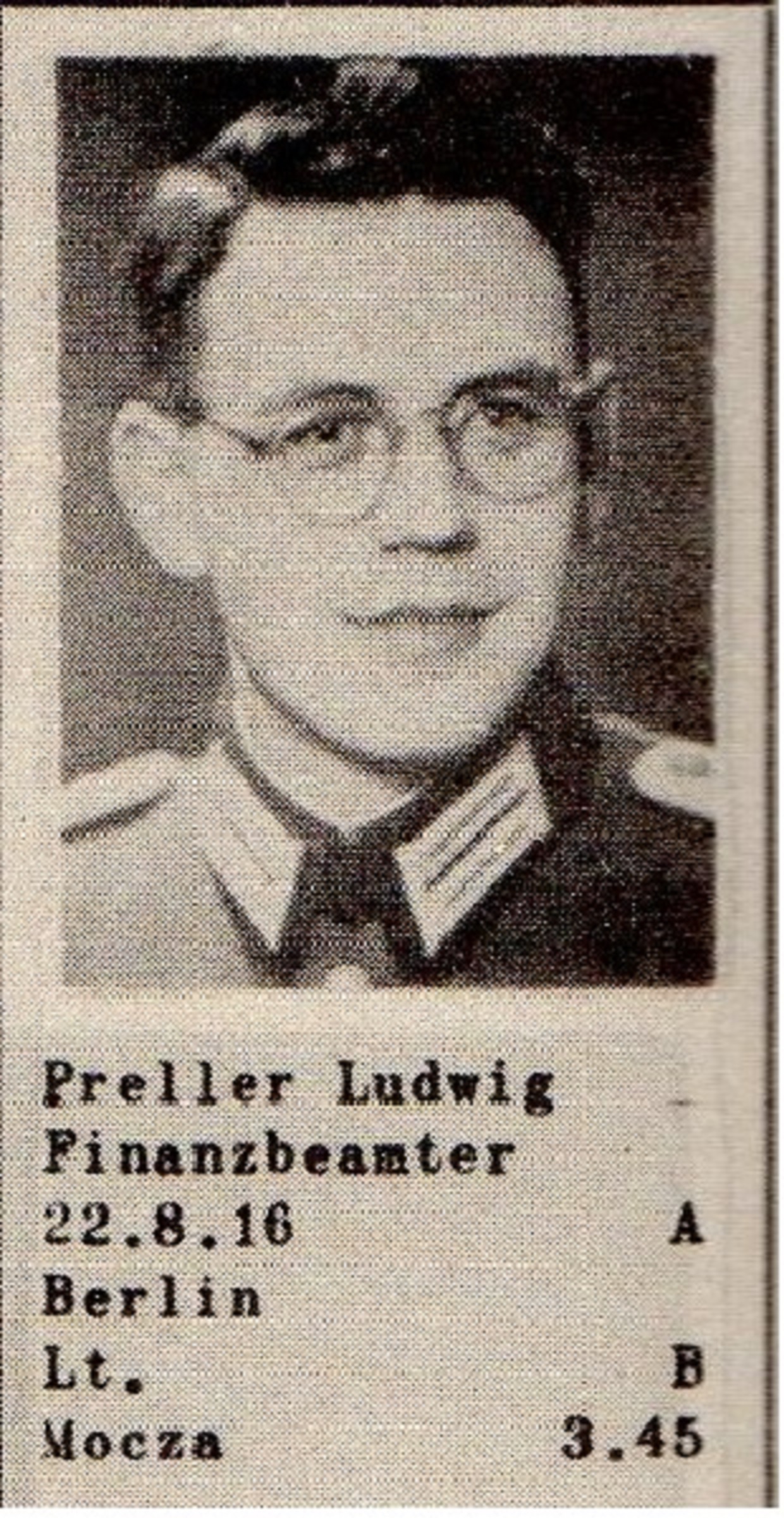
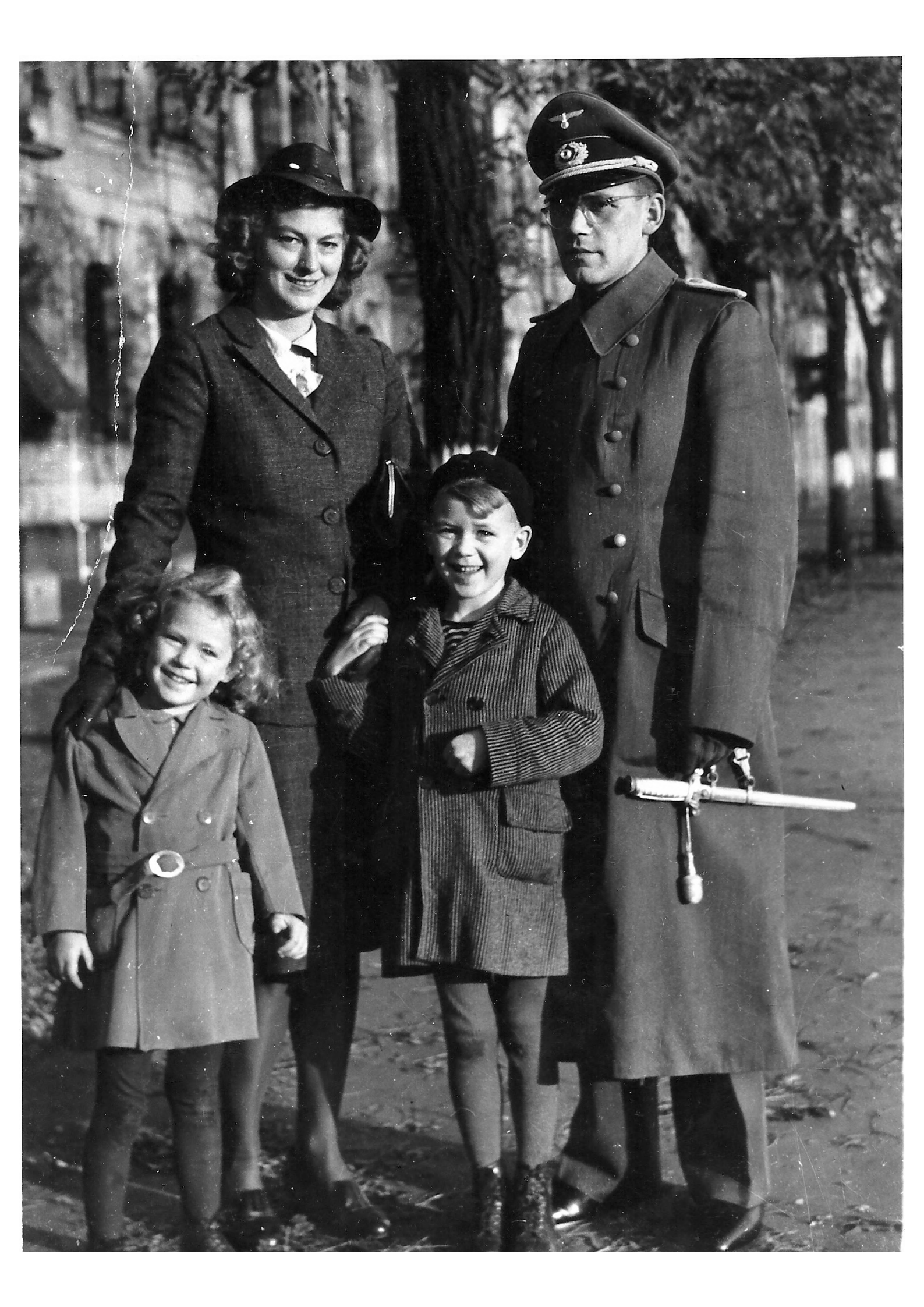


Missing in action – Grandfather Ludwig Preller

Ludwig Preller – Staff Officer Grenadier-Regiment 870
Ludwig Preller – Staff Officer Grenadier-Regiment 870. From the DRK (German Red Cross register). Note: Berlin is the place of residence in 1939

My German grandfather was reported missing in action a few weeks only before the end of the war, in Western Hungary (March 1945). Finding a relative missing in action during WWII – on any side of the conflict – is quite a challenge. All I knew from the family is that my grandmother had hoped for some time that he had survived his wounds sustained during a Soviet offensive and that he might have been taken into captivity. But a search with the German Red Cross (DRK) a few years after the war stayed fruitless. I present here some of the information obtained through the Deutsche Dienststelle/WaSt (Wehrmachts Auskunftstelle – Information service of the Wehrmacht established during the war) and the Volksbund Deutscher Kriegsgräberfürsorge (German war graves commission) together with some results from my own internet searches.

The DRK has him registered (follow link) as part of I. Bataillon of the 870. Grenadier Regiment, with the above photograph alongside those of other members of that batallion reported missing.

Last known photograph of Ludwig Preller. Here with family on his last permission from the front. October 1944, Hornschuh Promenade, Fürth, Bavaria.

He was last seen on a motorbike on his way to deliver a message to or from staff when he was heavily wounded. At the time he was serving in the Grenadier-Regiment 870 which belonged to the 356. Infanterie-Division. This division was positioned west of Székesfehérvár/Stuhlweißenburg, north of lake Balaton (Plattensee) in March 1945. Military action in this region in March 1945 was part of Hitler’s last ever offensive: Operation Frühlingserwachen (Spring Awakening). As was typical of Hitler’s suicidal drive and his vengeance on the German people and soldiers themselves in the final weeks of the war, casualties were massive and pointless. Many didn’t awake any more from this “Spring awakening”. My grandfather was one such victim.

In the WaST report, it says there has been no declaration of death or of him missing in action. However the Volksbund has him down in the memorial book of the Budaörs cemetery west of Budapest (http://www.volksbund.de/kriegsgraeberstaette/budaoers.html) as missing in action with the following personal details:

Nachname: Preller
Vorname: Ludwig
Dienstgrad: Hauptmann
Geburtsdatum: 22.08.1916
Geburtsort: Fürth/Bayern
Todes-/Vermisstendatum: 03.1945
Todes-/Vermisstenort: Ungarn westl. von Budapest

The location of Mocsa/Mocza mentioned on the photograph from the VBL (Vermissten Bild Liste of the German Red Cross) would be of the last place he would have been seen in action – so probably about where he was wounded.

Here a couple of links to maps of locations of: Székesfehérvár (German: Stuhlweißenburg) and Mocsa.

Bohdan Bobrowski, a relative of Jan Bobrowski who was a driver in the Stab of V. FIB 999 on Lemnos in 1944 (same unit my grandfather was in), recently visited the cemetary and sent photos of some of the graves of unidentified soldiers there.

Early Life and Military trajectory

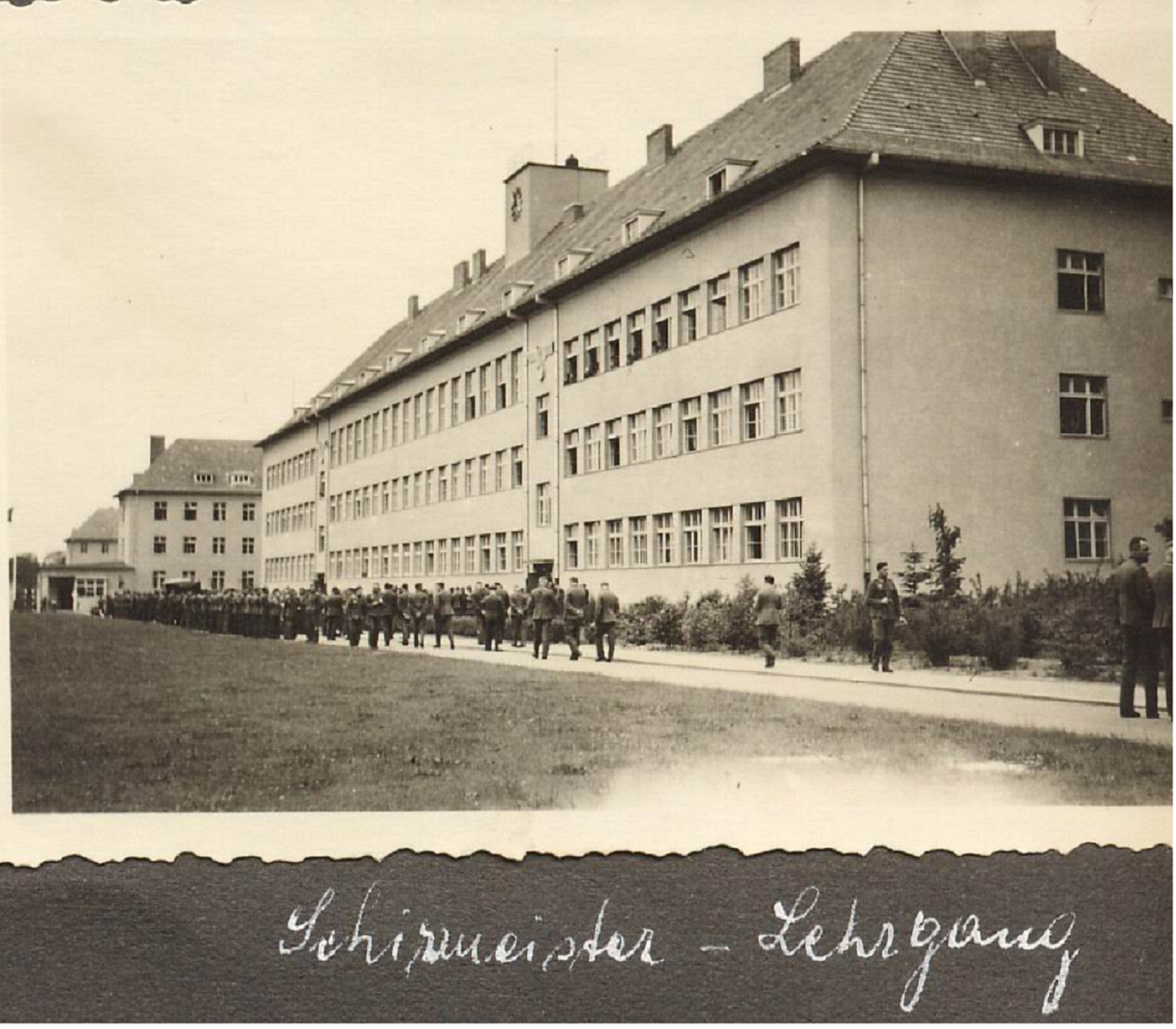
Born in 1916, my grandfather grew up as an orphan in a religious institution, with his three brothers. He finished his Abitur (Highschool) in 1937 in his home town Fuerth (Northern-Bavaria or rather Franconia, as the family would usually specificy). This is where he had met Irmgard Puff (renamed Herrmann), in 1933 or earlier and whom he later married in 1938 after his Arbeitsdienst (Hitler’s “national work service”) and her Maedelsdienst time (the young women’s equivalent). He went through military training (1938-1939) in Wünsdorf training school near Berlin, where he was integrated into the Panzer-Lehr-Regiment (an unit that had participated in the Spanish Civil War, hence he got to wear the “Spanien-Armband” on his uniform, although he himself didn’t go to Spain (as far as we know). My grandmother Irmgard joined him there in Wünsdorf (near Berlin where part of the relative on her side, the Mahir branch of her mother’s family lived) and that’s where they married a few months before their first child, my late oncle Adolf († 2022) was born. The regiment’s officer apparently held the ceremony or at least signed the marriage certificate.

Waffenschule Wünsdorf - Credit: Larrister Collection.
Waffenschule Wünsdorf – Credit: Larrister Collection. (Click on image for full view)

Below, in German, the information of his military trajectory sent to me by the Deutsche Dienststelle/WaST service in 2012:

Ludwig Preller, geboren am 22 August 1916 in Fürth, Bayern

Dienseintritt: 04.11.1937
Erkennungsmarke: -130 – 8./Panz.Lehr-Rgt.
Dienstgrad: Leutnant
Hemeitanschrift: Ehefrau Irmgard Preller, Fürth, Tannenstr. 6

Truppenteile:
04.11.1937 14. Kompanie/Infanterie-Regiment 63
lt. Meldung v. 19.09.1940 8. Lehrkompanie/ Panzer-Lehr-Regiment
lt. Meldung v. 07.06.1941 4. Kompanie/Infanterie-Regiment (motorisiert 900)
16.12.1941 Genesenden-Kompanie/Panzer-Jäger-Ersatz-Abteilung 3
15.03.1942 Restkommando II./Panzer-Lehr-Regiment
03.09.1942 1. Kompanie/Panzer Grenadier-Ersatz-Bataillon 8
25.09.1942 Stamm-Kompanie/Panzer Grenadier-Ersatz-Bataillon 8
Abgang: 14.11.1942 zur Verfügungs-Kompanie 233
26.11.1942 Stamm-Kompanie/Panzer Grenadier-Ersatz-Bataillon 8
lt. Meldung v. 05.05.1943 Stab III./Afrika-Schützen-Regiment 963
27.07.1943 20. Kompanie/Festungs-Infanterie-Bataillon 999
lt. Meldung v. 02.10.1944 Stab V./ Festungs-Infanterie-Bataillon 999
20.11.1944 Stab/Feld-Ersatz-Bataillon 356
Zugang: v. Führer-Reserve-Heeresgruppe C
Abgang 11.12.1944 zum Grenadier-Regiment 870

Lazarettaufenthalte:
16.10.1941 in Malizkaja schwer verwundet;
an Haupt-Verband-Platz abgegeben,
17.10.1941 in Kriegslazarett 906 aufgenommen: Pistolenschuss-
Verletzung am linken Schulterblatt, (this field hospital was in Vitebsk, Belarus).
29.10.1941 verlegt ins Reserve-Lazarett Rastenburg,
08.11.1941 verlegt ins Reserve-Lazarett Wernigerode,
02.12.1941 dienstfähig- zur Truppe entlassen.

Eine Vermissten- bzw. Gefangenen- oder Todesmeldung liegt nicht vor.

Some links relating to locations in the above Laufbahn (trajectory):

About the Infanterie-Regiment (mot) 900: http://www.lexikon-der-wehrmacht.de/Gliederungen/Infanterieregimenter/IR900-R.htm

and about the battle of Wjasma (which is probably where Malizkaja lies, the place where Ludwig Preller was wounded): http://de.wikipedia.org/wiki/Doppelschlacht_bei_Wjasma_und_Brjansk

http://de.wikipedia.org/wiki/Doppelschlacht_bei_Wjasma_und_Brjansk

About the “Spring Awakening” offensive in the Ballaton area:

http://diepresse.com/home/zeitgeschichte/4680171/Fruhlingserwachen-1945_Hitlers-letzte-Offensive

Other related websites/links to find those killed or missing in action from Germany:

The missing persons photograph list of the German Red Cross (Vermissten Bildliste): https://www.drk-suchdienst.de/de/angebote/zweiter-weltkrieg/vermisstenbildlisten-%E2%80%93-online

http://www.wehrmacht-awards.com/forums/showthread.php?p=5395024

The German war graves commission’s search for missing soldiers link: https://www.volksbund.de/graebersuche.html

Map of the German invasion of USSR: http://upload.wikimedia.org/wikipedia/commons/1/15/Invasion1941.jpg (Credit: The Department of History, United States Military Academy)

Related articles